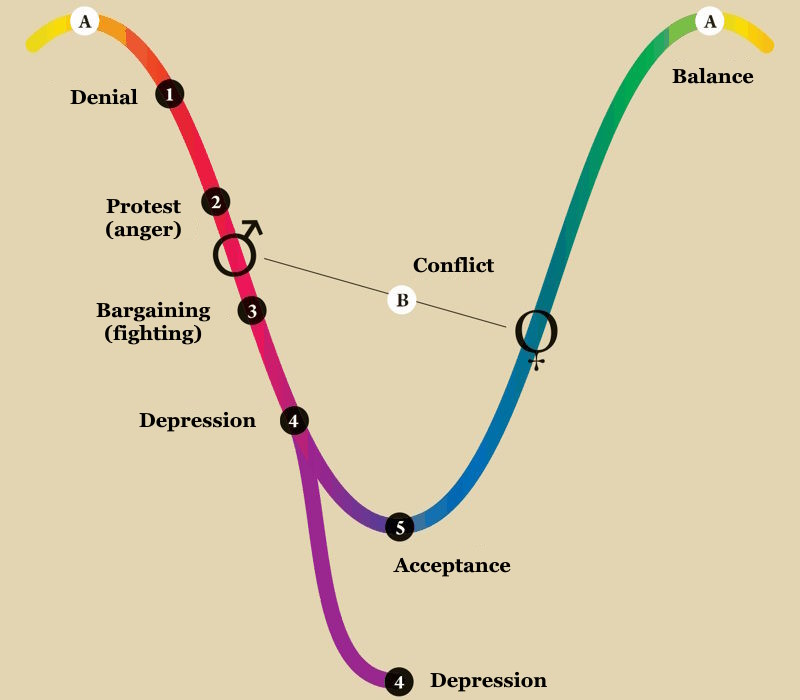
The divorce process is emotionally comparable to the grieving process following a death. In a divorce, you may both be in very different stages of the grieving process, for example if you or your partner do not want to divorce at all. The grief curve describes the different stages of the coping process.
1. Denial
In this stage, people consciously or unconsciously refuse to accept facts, information or the reality of the situation. Denial is a defence mechanism. Some people remain stuck in this stage when they have experienced something traumatic that can be ignored.
2. Protest (anger)
This anger can take many forms. People who have experienced a traumatic event may be angry with themselves and/or others, especially those who are dear to them. Knowing this can help you better understand the anger of someone who is upset, while remaining objective and not judging the person who is grieving.
3. Bargaining (fighting)
People who are dealing with a traumatic event may start to negotiate or try to reach a compromise. For example, if a relationship is coming to an end, they may ask, 'Can we still be friends?
4. Depression
This phase is also known as preparatory mourning. It is actually a dress rehearsal for the aftermath. This phase is different for everyone. It is a kind of acceptance (phase 5) but with emotional attachment. It is very natural for someone to experience feelings of sadness, regret, fear and/or uncertainty. This shows that the person has begun to accept reality.
5. Acceptance
This phase of acceptance depends on the individual, but is generally characterised by a certain emotional distance and objectivity. People slowly but surely begin to see things in perspective again. They regain hope and invest more actively in their new life.
A. Balance
From balance to a new balance.
B. Conflict
Conflicts often arise because both spouses are in different stages of the process.
Do you want to know more about how Xantèr can help you?
Contact us at 030 - 212 96 76 or info@xanter.nl