
Please find our September newsletter below. For most people, the summer holidays are now over, and Budget Day (Prinsjesdag) has just taken place. This is a good time to review the most important developments. We have also used the summer to reflect on our experiences so far this year and to look ahead. What have we noticed and, more importantly, how can you benefit from it as a client?

Advice on financing rental property
You will no doubt have read that many private investors are selling their properties. Even so, we continue to see interest in buying and letting property, for example as an investment or as a way of providing for retirement. History shows that property can, in many cases, be a sound long-term investment.
We would be pleased to help you explore whether this could also be of interest to you. To do so, we work with an advisory firm that specialises in property finance. Together, we can clearly identify the options and suitable solutions for your circumstances. Interested? Please let us know.
Contact us at This email address is being protected from spambots. You need JavaScript enabled to view it. or 030 - 212 96 76. We're happy to help!

What we have observed and how you can benefit
A number of things have caught our attention in recent months. We would like to share them so that you can benefit from our observations.
- Keeping term life insurance in place after a separation (divorce)
- Making an offer without a financing reservation
- Separating cohabiting partners without a separation agreement
- Interest-only mortgages: the current position
- Rising interest rates
- Developments in Box 3 (taxation on assets)
Keeping term life insurance in place after a separation (divorce)
When a couple separates, attention usually turns first to the parenting plan and the home. Who will remain in the property, is this financially feasible, or will the property need to be sold? Disagreements also regularly arise about how to account for personal funds contributed in the past.
One matter that often receives too little attention is the life insurance that the partners have taken out on each other’s lives. This is not always addressed in the divorce settlement or separation agreement.
After a separation, an existing beneficiary designation may have unintended consequences. For example, if you die, the sum insured could be paid to your former partner even though this is no longer what you intended.
Some former partners deliberately choose to keep the policy in place, for example because they want the proceeds to benefit their children. In other situations, both partners want to prevent the proceeds from passing to the other person. It is therefore important to consider this carefully and make a conscious choice. Options include naming the children as beneficiaries and arranging in a will who will manage the assets while the children are under 18.
If you are going through a separation yourself, or have relatives or friends who are, we can provide support.
Making an offer without a financing reservation
Another situation we have encountered several times recently is making an offer on a property without a financing condition. This is becoming more common, but it requires careful preparation. It is important to establish in advance whether the finance is feasible and which risks you would be taking. This preparation is particularly important for business owners. For them, we often arrange an income assessment declaration (inkomensverklaring or IKV) in advance, so that the assessed income remains valid for six months. This provides greater certainty and avoids unnecessary stress during the bidding process.
For clients in salaried employment, too, we can prepare the finance as thoroughly as possible in advance. This may allow you to make an offer without a financing condition if this is necessary and prudent. We will, of course, always discuss the potential risks with you.
Separating cohabiting partners without a separation agreement
Cohabiting partners with a cohabitation agreement will have made arrangements about their shared financial affairs. Nevertheless, when partners separate, we regularly find that they believe a formal separation agreement is unnecessary, for example if they sell their jointly owned home and each buy a new property.
Mortgage lenders, however, regularly ask for a signed separation agreement. You do not need to visit a civil-law notary for this: a mediator or financial adviser like us can draw up the agreement. A properly drafted separation agreement also provides clarity about the financial settlement and helps prevent disputes afterwards. It is particularly advisable to record the arrangements carefully when children are involved.
Interest-only mortgages: the current position
As previously reported, the three major banks in the Netherlands – ABN AMRO, ING and Rabobank – have restricted the options for interest-only mortgages. These changes have come about partly under pressure from the ECB and De Nederlandsche Bank (DNB).
At the end of a 30-year term, you cannot simply continue an interest-only mortgage unchanged. You will need to extend the mortgage or repay all or part of it.
At the three major banks, existing arrangements will in principle remain in place as long as no changes are made to the mortgage. If you buy another property, however, the new rules will apply. For the time being, other lenders still allow up to 50% of the market value to be financed on an interest-only basis.
As financial planners, we consider your overall financial position. On that basis, we can assess the options for continuing an interest-only loan and determine whether any alternatives may be more suitable.
Rising interest rates
We have seen interest rates rise in recent months. Geopolitical tensions, including the wars in Iran and Ukraine, are playing a part, partly because of their impact on inflation. Central banks, including the Federal Reserve and the European Central Bank (ECB), have now raised interest rates again. In addition, increasing amounts of capital are needed to finance the welfare state.
When a fixed-interest period ends, many people choose to fix their rate again for a similar term. One alternative may be to choose a short fixed-interest period of, for example, one year, which gives you greater flexibility. If interest rates then fall, you can move relatively easily to a longer fixed-interest period. There is, of course, also a risk that rates will rise further in the short term.
We can discuss which option is most suitable for your circumstances.
Developments in Box 3 (taxation on assets)
We have previously written about the forthcoming legislation on the taxation of assets. It is still unclear exactly what the new legislation will look like. The government is negotiating the proposals with the opposition. As other issues also form part of these negotiations, it may be some time before there is clarity.
Nevertheless, it remains important to achieve a sufficient return to offset – and, where possible, outperform – the effects of inflation and taxation. We can help you identify the available options.
Would you like to know what these developments could mean for you? Feel free to contact us at This email address is being protected from spambots. You need JavaScript enabled to view it. or 030 - 212 96 76.
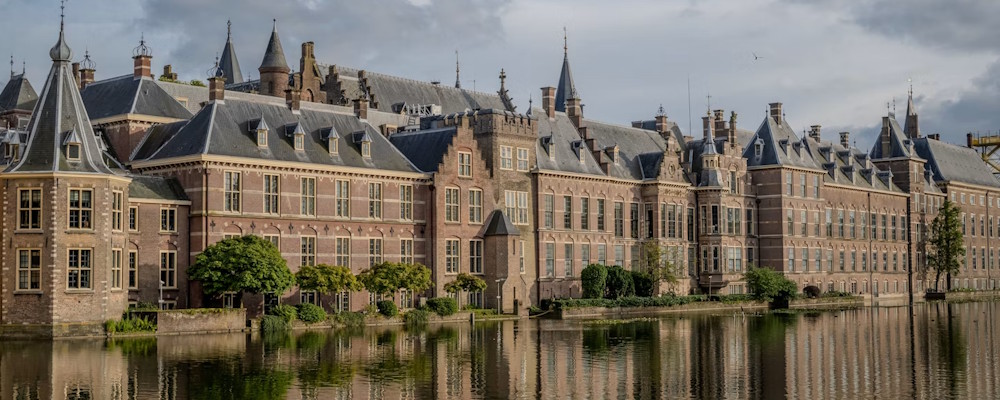
Budget Day 2026 (Prinsjesdag)
What will change for you in 2027?
The government announced its plans for 2027 on Budget Day (Prinsjesdag). Purchasing power is expected to change very little for many households. Nevertheless, there are several measures that could affect your tax, healthcare costs, home, pension or income.
Purchasing power remains broadly unchanged
On average, purchasing power is expected to fall by 0.1% in 2027. People in work are expected to be 0.2% worse off on average, while benefit recipients are expected to be 0.1% worse off. Pensioners, by contrast, are expected to see an average increase of 0.3%. A higher employment tax credit and a slightly lower tax rate in the first band will help support purchasing power.
Minor changes to income tax
There will continue to be three income tax bands in 2027. Taxable income up to €39,247 will be taxed at 36.23%. Income from €39,247 to €78,426 will be taxed at 38.16%, and income above that at 49.50%. The employment tax credit will also increase.
Second homes and holiday homes: lower property transfer tax
Are you buying a property that you will not occupy yourself, such as a second home, holiday home or buy-to-let property? The government intends to reduce property transfer tax from 8% to 7% from 1 January 2027. On a property costing €400,000, this would save €4,000 in property transfer tax. The 2% rate for a property that you will occupy yourself and the first-time buyer exemption will remain unchanged.
Savers and investors: Box 3 (asset taxation) remains in flux
The Box 3 tax rate will remain at 36% in 2027. The tax-free allowance will rise to €60,098 per person, or €120,196 for tax partners. There is still uncertainty about the new Box 3 system. If the tax calculated using the deemed return is higher than the tax based on the actual return, you may, subject to certain conditions, use the rebuttal scheme. It therefore remains important to keep accurate records of matters such as interest, dividends, rental income and changes in value.
Higher tax-free travel allowance
The maximum tax-free travel allowance will increase from € 0.23 to € 0.25 per kilometre. This increase will apply retrospectively from 1 January 2026. Please note that an employer may pay the higher allowance, but is not required to do so.
Health insurance will become more expensive
The average health insurance premium is expected to rise by €12.50 to approximately €169 per month. The final premium will vary by insurer and will be announced later. The compulsory excess will also increase, from €385 to €400. The maximum healthcare allowance for single people will rise to €140 per month.
Maximum unemployment benefit period remains 24 months for now
The plan to reduce the maximum duration of Dutch unemployment benefit (WW) from 24 to 12 months has been postponed. The proposed commencement date will move from 2028 to 1 January 2029. The current maximum benefit period will therefore remain in place for the time being.
Pensions: important for higher earners
In 2026, the income threshold above which you can no longer build up a pension or annuity with tax relief is €137,800. The government intends to freeze this threshold at €137,800 from 2027 through 2032. As wages rise, more people may therefore exceed this threshold. Higher earners should consequently check regularly whether they are developing a pension shortfall.
Business owners may also find it tax-efficient to use the scope available to make up pension shortfalls from the past ten years. We can assess this for you and advise you accordingly.
State pension age to rise more slowly than previously planned
The earlier proposal to link increases in the Dutch state pension (AOW) age one-for-one to life expectancy from 2033 has been withdrawn. The current system will remain in place. In principle, if life expectancy rises by one year, the state pension age will increase by eight months.
Further increase in childcare allowance
Working parents who do not yet receive the maximum reimbursement will receive more childcare allowance in 2027. According to the government, a family with two children, a combined income of approximately twice the average income and two days of childcare per week will receive around €700 more in childcare allowance in 2027 than in 2026.
Energy: emergency fund to reopen
The Temporary Energy Emergency Fund (Noodfonds Energie) will reopen in the winter of 2026/2027. The fund is intended for households on a low income with high energy bills. The precise conditions and the date from which applications can be made have not yet been announced.
What does this mean for you?
Many changes may seem small at first sight, but taken together they can have a real impact on your financial position. It is sensible to check regularly whether your financial planning still reflects your circumstances, particularly in relation to your mortgage, pension, assets in Box 3 or changes in your income.
Please note: not all of the plans presented on Prinsjesdag are final. Proposals may still be amended during their passage through the House of Representatives and the Senate. Given the current political situation in the Netherlands, further changes are highly likely.